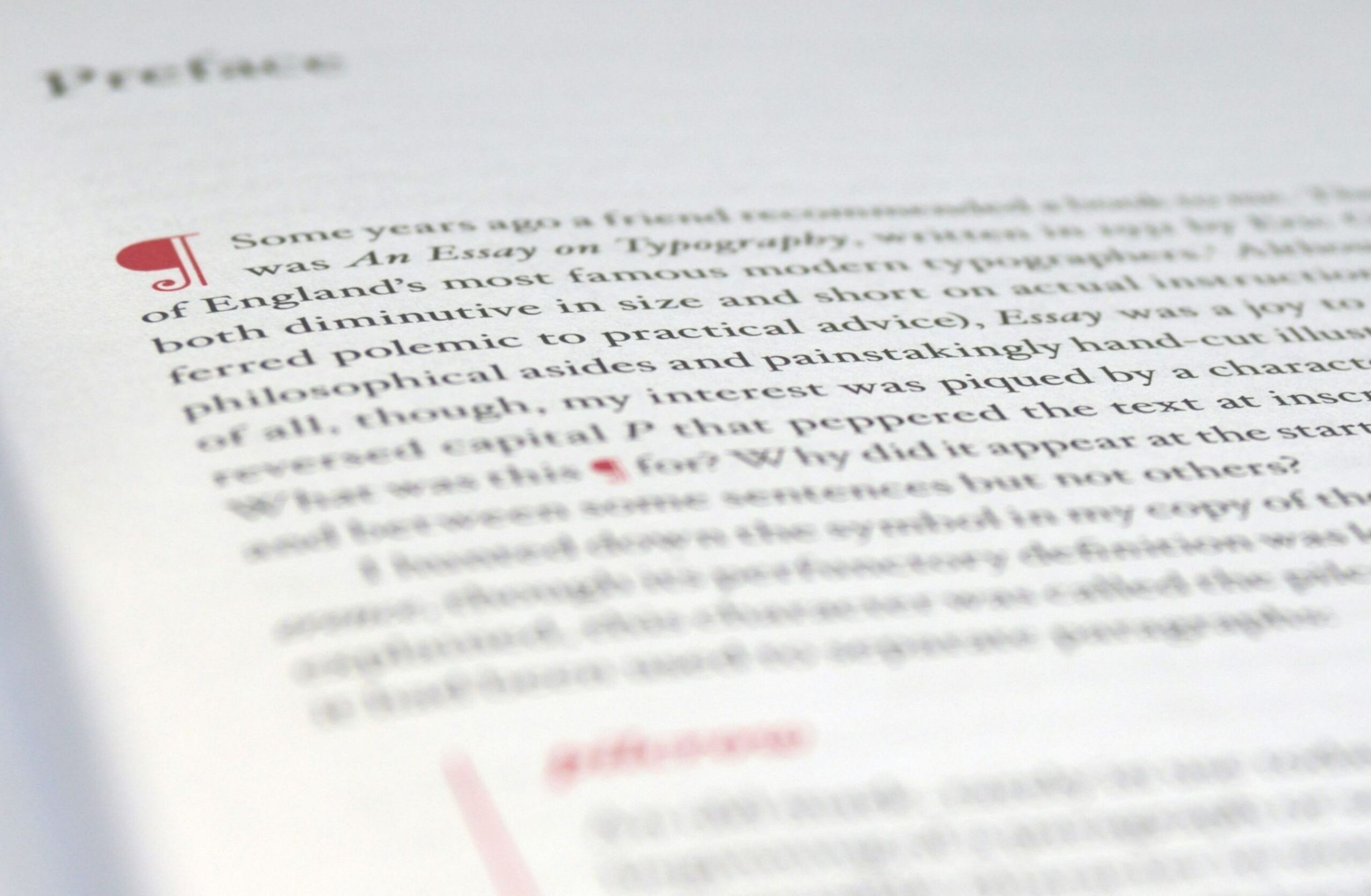
As a reader, you pick up a book, captivated by its cover and intrigued by its plot. But what makes reading effortless and immersive? The answer lies in an invisible craft—typesetting.
Great typesetting transforms a manuscript into a seamless reading experience. It’s both an art and a science, blending design and structure to ensure clarity, readability, and even cost efficiency.
The Science of Readability
Ever wondered why some books are easy on the eyes while others feel like a struggle? Thoughtful choices in typeface, line length, kerning, and white space determine how comfortably you read.
-
Serif fonts guide the eye smoothly across printed pages, while sans-serif fonts are often preferred for screens.
-
Optimal line length (50–75 characters in English) prevents eye fatigue. Chinese, Japanese, Korean, and other non-Latin script books require different calculations to maintain comfort.
-
White space and proportional leading allow text to « breathe, » reducing cognitive strain.
-
Eco-friendly typesetting uses space-efficient design without sacrificing readability—reducing paper, ink, and shipping costs.
Beyond aesthetics, typesetting serves function and accessibility. Specialty fonts designed for dyslexic readers use distinct letterforms to prevent letter-flipping, while optimized text layouts improve readability for those with visual impairments.
Even something as simple as a running header helps readers navigate a book efficiently. Thoughtful typesetting enhances engagement, whether it’s a novel, textbook, or technical manual.
____________________________________________________________________
Next Month: The Invisible Hands Behind the Magic—How expert compositors bring books to life, ensuring quality, efficiency, and adaptability in an evolving industry.
Thoughtful typesetting ensures books are not only beautiful but also effortless to read. If you’re looking to refine your production process or explore ways to improve readability and efficiency, our team is here to help. Reach out to learn more about best practices in book composition and how they can enhance your titles.